
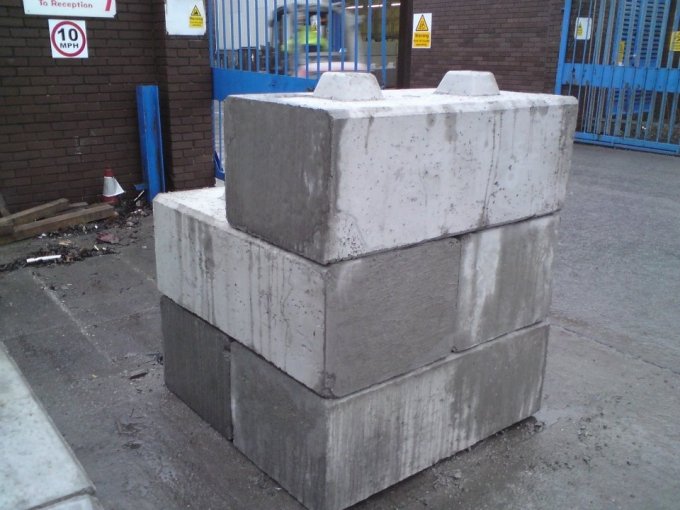
Scaffold And Access Structure Stability Using Precast Concrete Blocks
Safe, Reliable Stability Solutions for Temporary Access and Working at Height
Scaffold and access structures are critical to safe working at height across construction, industrial maintenance, energy, and infrastructure projects. Ensuring their stability, particularly where ground conditions, loadings, or fixing options are constrained, is essential for compliance and workforce safety. Precast concrete blocks, including ballast and kentledge units, provide a proven and widely accepted solution for stabilising scaffold and access systems without intrusive groundworks. Manufactured to known, certified weights, precast concrete blocks offer predictable performance, rapid deployment, and flexibility across a wide range of temporary access applications.
What Are Scaffold Blocks (Kentledge Scaffold Block)?
How Precast Concrete Blocks Support Scaffold Stability
Precast concrete blocks are used to provide deadweight restraint to scaffold and access structures, counteracting overturning, uplift, and lateral forces caused by wind loads, imposed loads, and operational activities. Their modular nature allows loads to be accurately calculated and adjusted in line with scaffold design requirements.
They are particularly valuable where tying into existing structures is limited or prohibited, or where ground penetration is not permitted.
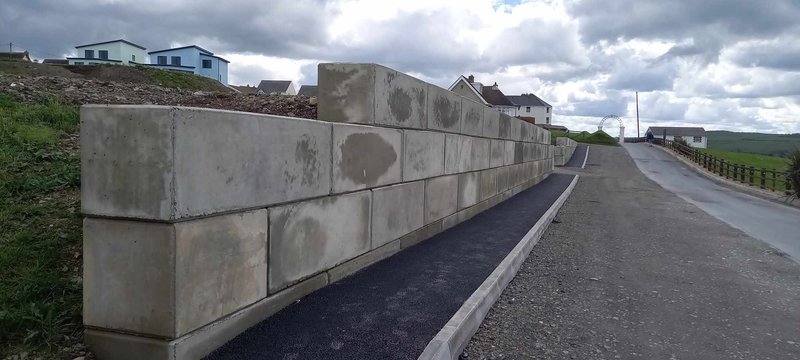
Why Choose Elite Precast
With decades of precast expertise, in-house engineering support and a proven delivery record on projects of every scale, Elite Precast is the partner specifiers trust. We pair robust, repeatable manufacturing with the flexibility to engineer bespoke solutions when a standard product will not do.
Key Applications
Key Applications for Scaffold and Access Structures
Free-Standing and Tied Scaffold Systems — Precast blocks are commonly used to stabilise:
Free-standing scaffolds
Façade and maintenance scaffolding
Temporary access towers
Birdcage scaffolds and working platforms
They provide reliable restraint where traditional ties or anchors are impractical.
Access Platforms and Walkways — Blocks are used to stabilise temporary access platforms and walkways in:
Industrial plants and refineries
Power stations and substations
Rail and highway environments
Ports and marine facilities
Their use avoids drilling or fixing into sensitive or live assets.
Edge Protection and Temporary Barriers — Precast blocks support edge protection systems and temporary barriers by providing mass and resistance to horizontal loads, improving safety at exposed edges and elevated work areas.
Confined, Live, or Sensitive Environments — In live operational sites or environmentally sensitive areas, precast blocks enable scaffold stability without excavation, ground anchors, or permanent fixings, reducing risk and disruption.
Benefits
Predictable Load Performance — Manufactured to known weights for accurate design.
Improved Safety — Reduces risk of movement, overturning, or uplift.
No Ground Penetration Required — Ideal for roofs, decks, and hardstands.
Fast Installation and Removal — Supports short-duration works and shutdowns.
Reusable Across Projects — Cost-effective for ongoing maintenance programmes.
Widely Accepted — Commonly specified within scaffold design standards.
Engineered for Your Environment
Engineered to Support Temporary Works Design
All precast concrete blocks used for scaffold and access stability are produced under controlled conditions to ensure consistency and durability. Features include:
Integrated lifting points for safe handling
Clear weight markings for site verification
Robust construction suitable for repeated use
We work closely with scaffold designers, temporary works coordinators, and principal contractors to ensure block configurations align with design calculations, wind loading assumptions, and site constraints.
Custom block sizes and weights can be provided to suit specific scaffold systems and access layouts.
Compliance, Safety, and Industry Acceptance
Precast concrete blocks are widely accepted as ballast solutions within scaffold and temporary works design. Their use supports compliance with:
Scaffold design and temporary works guidance
Health and safety regulations for working at height
Project-specific risk assessments and method statements
Full documentation, including certified weights and handling information, is available to support approvals and site inspections.
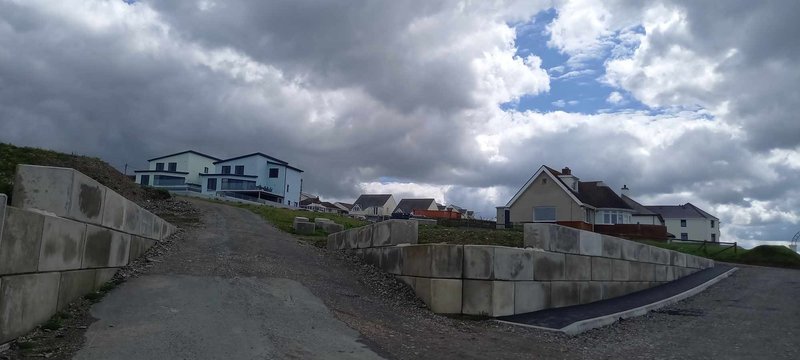
Why Choose Scaffold Blocks (Kentledge Scaffold Block) for This Application?
Temporary access systems are only as safe as their foundations. Precast concrete blocks provide a flexible, low-risk solution for achieving scaffold stability across a wide range of environments, particularly where traditional fixings are constrained.
By using certified, reusable ballast solutions, project teams can improve safety, simplify temporary works design, and maintain programme efficiency.
Featured products

Frequently Asked Questions
Are precast blocks suitable for free-standing scaffolds?
Yes. They are commonly used to provide deadweight restraint where tying is limited or not permitted, subject to scaffold design calculations.
Can blocks be used on roofs or suspended decks?
Yes, provided load capacity checks are carried out. Known block weights allow engineers to verify suitability for roofs and elevated structures.
Do blocks replace the need for scaffold ties?
Blocks can reduce or eliminate the need for ties in some applications, but this must always be confirmed by a qualified scaffold designer.
Are blocks easy to remove after works are complete?
Yes. Precast blocks can be lifted away quickly, leaving minimal site impact and reducing reinstatement work.
Can block configurations be adjusted during the project?
Yes. Their modular nature allows additional blocks to be added or removed as scaffold layouts or loadings change.
Are blocks compliant with temporary works requirements?
Yes. When specified and installed correctly, precast blocks are widely accepted within temporary works and scaffold design frameworks.