
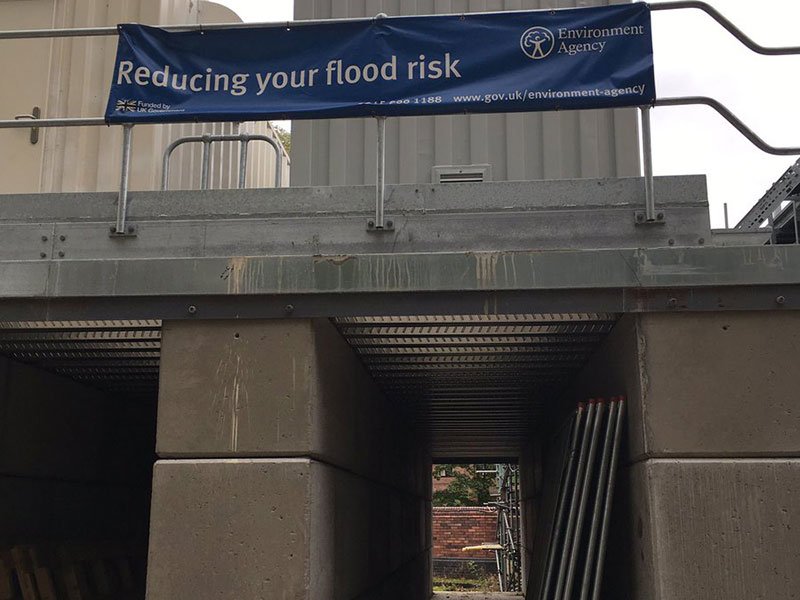
Kentledge Blocks for Construction Site Anchoring and Restraint Systems
Reliable Deadweight Solutions for Safe Temporary and Permanent Restraint
Construction sites present constantly changing load conditions, temporary works requirements, and safety challenges. From stabilising structures to restraining equipment and temporary installations, effective anchoring and restraint systems are essential to prevent movement, uplift, or overturning. Kentledge blocks provide a proven, modular deadweight solution for construction site anchoring and restraint applications. Manufactured to certified weights and designed for safe handling, they offer predictable performance without the need for intrusive ground anchors or permanent fixings.
What Are Kentledge Blocks?
What Are Kentledge Blocks in Construction Anchoring Applications?
Kentledge blocks are precast concrete units used to provide controlled ballast and restraint. In construction site environments, they act as counterweights to resist imposed loads such as wind, operational forces, vibration, or temporary structural stresses.
Their modular configuration allows engineers to calculate and apply precise stabilising loads in accordance with temporary works designs and project-specific risk assessments.
Why Choose Elite Precast
With decades of precast expertise, in-house engineering support and a proven delivery record on projects of every scale, Elite Precast is the partner specifiers trust. We pair robust, repeatable manufacturing with the flexibility to engineer bespoke solutions when a standard product will not do.
Key Applications
Key Applications in Construction Site Anchoring and Restraint
Temporary Structure Stabilisation — Kentledge blocks are commonly used to stabilise:
Site cabins and welfare units
Temporary buildings and modular structures
Formwork systems
Hoarding and perimeter protection
They provide dependable restraint where ground penetration is not permitted or practical.
Crane Mats and Equipment Restraint — Heavy plant and construction equipment may require additional stability during operation. Kentledge blocks are used to:
Counterbalance temporary lifting setups
Restrain mobile plant
Support load transfer systems
Their known weights allow accurate calculation of safety factors.
Wind Load and Uplift Resistance — Exposed construction sites are subject to significant wind forces. Kentledge blocks are used to counteract uplift and sliding forces acting on:
Temporary roofing systems
Façade retention systems
Protective enclosures
Sheet piling restraint systems
Temporary Works Anchoring — Temporary works designs often require non-permanent restraint solutions. Kentledge blocks are widely used to anchor:
Falsework and propping systems
Shoring frames
Edge protection systems
Access platforms and working decks
Infrastructure and Civil Engineering Projects — On civil engineering projects, kentledge blocks provide anchoring solutions for:
Bridge works and temporary supports
Retaining systems
Excavation restraint
Phased construction activities
Benefits
Certified Load Accuracy — Manufactured to known weights for precise calculations.
No Ground Penetration Required — Ideal for hardstands, slabs, and sensitive sites.
Rapid Installation and Removal — Supports evolving construction programmes.
Reusable Across Projects — Cost-effective for contractors and framework agreements.
Reduced Site Risk — Minimises excavation and permanent fixings.
Adaptable to Changing Site Conditions — Modular design allows load adjustments.
Engineered for Your Environment
Engineered for Construction Site Demands
Kentledge blocks used in construction anchoring applications are designed to withstand repeated lifting, transportation, and repositioning. Key features include:
Integrated lifting anchors for safe mechanical handling
Clear weight identification markings
Durable reinforced concrete construction
Compatibility with common restraint and connection systems
We collaborate closely with temporary works coordinators, structural engineers, and principal contractors to ensure block configurations align with approved designs and method statements.
Bespoke weights are available for complex anchoring scenarios or restricted access sites.
Compliance and Safety Assurance
Kentledge blocks are widely accepted within temporary works and construction site safety frameworks. Their use supports compliance with:
Temporary works design guidance
Construction health and safety regulations
Structural restraint requirements
Project-specific risk assessments
Full technical documentation, including weight and handling guidance, is provided to support audits and approvals.
Why Choose Kentledge Blocks for This Application?
Construction sites require flexible, safe, and reliable restraint solutions that adapt to changing conditions. Kentledge blocks provide a simple, low-risk, and industry-proven method for achieving anchoring and stabilisation without permanent intervention.
Their modular and reusable nature supports efficient programme delivery, improved site safety, and long-term cost control.
Featured products

Frequently Asked Questions
Are kentledge blocks suitable for temporary construction anchoring?
Yes. They are widely used for temporary restraint and stabilisation where permanent anchors are not required or permitted.
Can kentledge blocks replace ground anchors?
In many cases, yes. However, suitability must always be confirmed through engineering calculations and temporary works design review.
How are the required block weights calculated?
Loads are calculated based on wind forces, imposed loads, equipment specifications, and safety factors. Certified block weights allow precise ballast determination.
Are kentledge blocks reusable across multiple projects?
Absolutely. Reusability is a major advantage, particularly for contractors operating across multiple sites.
Do kentledge blocks comply with temporary works standards?
Yes. When specified and installed in line with approved designs, they are widely accepted within temporary works frameworks.
Can bespoke configurations be supplied?
Yes. Custom sizes, weights, and connection details can be provided to suit project-specific anchoring and restraint systems.